
Ritual impurity, Torah observance, and the lighter yoke in Matthew 11:16-19, 25-30
Introduction: Death is the Problem; Law is the Solution
To offer instruction on studying Torah, the rabbis say, “turn it and turn it again, for all is within it” (paraphrased). This well known (in Jewish circles) description appears in the Jewish Talmudic writing, Pirkei Avot, or “Ethics of the Ancestors.”1
This week with the split reading from Matthew 11, we’ll indeed turn the text and turn it again to scratch the surface to reveal all that is within—or at least some of what is within, I don’t adequately treat the wisdom tradition that features in this text to, instead, spend more time with disagreements about law observance.
Death is the problem and motivating force, and proper law observance is the solution.
For my purposes, we’ll follow our usual program of considering what awareness of scripture the author presupposes for their audience and what rhetorical aims the author has in mind. A big assumption I make is that the audience would be familiar with Torah, specifically, in this case, Deuteronomy, to connect one description of Jesus in Matthew with the description of a rebellious child featuring in a legal code appearing in Deuteronomy. I suggest the audience would possess this familiarity because a primary function of the synagogue was (and still is) to read the Torah aloud, and so, the first century audience, largely illiterate, would learn the tradition of the law. A lesser assumption, but still an assumption, is that particular ideas of ritual purity would be easily identified by the audience based on the description ascribed by Matthew’s author to John. I say lesser assumption because this suppositional move stands on more firm ground, owing first to the gospel writers’ frequent discussion of impurity, and second, the ritual baths, a component of ritual purity practice, are revealed by archeology.
An argument against my presuppositions could be motivated by appeal to dates of authorship for the gospel accounts. For example, Matthew, where we see the author expanding and precisifying themes of ritual practice from Mark, was composed in the late first century of the common era, decades following Jesus’s execution. My claim that Matthew’s (late-first century) audience would connect with claims about Jesus’s life from mid-first century practice requires a lot more evidence than I’ve produce here.
I won’t attempt to diffuse this challenge. Instead, I name this objection, and I proceed anyway to offer a plausible discussion of today’s assigned reading by appeal to what I think could be the case for Matthew’s audience and the anonymous author’s rhetorical aims to situate Jesus within a Second Temple context, despite writing decades following its destruction.
In short, buyer beware.
My thesis is is this: Death is the problem and motivating force, and proper law observance is the solution. My claim is supported both by the descriptions of John and Jesus that open the assigned reading and Jesus’s invitation to take on the lighter yoke that connects this scene with the scene following in Matthew 12, both intentional engagements with proper interpretation of the law—something Matthew’s author has Jesus doing a lot. Jesus’s overall concern with righteousness in Matthew was a topic of discussion last week. Further, John’s plausible connection the Essenes offers reasons to think this tradition informed the Matthean author’s description of Jesus.
OK! You’ve heard death and taxes. Here’s death and the law.
Let’s get into it!
The Text
We always begin with the text because I think it’s important to first center ourselves in the assigned reading and allow our plain reading to orient us toward discussion. Of course, we’re limited by the english translation. Let me know if you want to help fund a PhD! Consider today’s assigned reading and stay alert to ideas, words, or descriptions that stand out to you.
Matthew 11:16-19; 11:25-30; New Revised Standard Version Updated Edition (NRSVUE):
16 “But to what will I compare this generation? It is like children sitting in the marketplaces and calling to one another,
17 ‘We played the flute for you, and you did not dance;
we wailed, and you did not mourn.’18 “For John came neither eating nor drinking, and they say, ‘He has a demon’; 19 the Son of Man came eating and drinking, and they say, ‘Look, a glutton and a drunkard, a friend of tax collectors and sinners!’ Yet wisdom is vindicated by her deeds.”
25 At that time Jesus said, “I thank you, Father, Lord of heaven and earth, because you have hidden these things from the wise and the intelligent and have revealed them to infants; 26 yes, Father, for such was your gracious will. 27 All things have been handed over to me by my Father, and no one knows the Son except the Father, and no one knows the Father except the Son and anyone to whom the Son chooses to reveal him.
28 “Come to me, all you who are weary and are carrying heavy burdens, and I will give you rest. 29 Take my yoke upon you, and learn from me, for I am gentle and humble in heart, and you will find rest for your souls. 30 For my yoke is easy, and my burden is light.”
Death and Righteousness: John, Jesus, and Elijah
What’s up with this generation?! Jesus wonders. They aren’t responding with action to our call, and they mock us.
The reading today opens with the audience being told that the reputations of John and Jesus are not respected, but I’m going to argue that this critique goes one step further, or at least, this plain reading of the text calls on us to wonder what a first century audience would have thought about the alleged ascetic John and the alleged drunkard Jesus.
For John, the audience thinks, possessed! To better understand this, we turn to the Levitical codes for ritual impurity that include demonic possession as one such impurity. For some of this discussion—and for a significant part of my own understanding—I credit the fairly recent book from Matthew Thiessen (2021), Jesus and the Forces of Death: The Gospels Portray of Ritual Impurity within First-Century Judaism. Therein, Thiessen writes:
But modern readers of the Gospels will not rightly understand Jesus apart from a more thorough comprehension of ancient Jewish (and non-Jewish) ritual purity concerns, precisely because these purity concerns map out the reality of the world as the Gospel writers conceived it (3).
When the crowd alleges demonic possession for John, the impure force that stands behind that claim is a force of death.2 While it is difficult to embody these first century lives, what we must press ourselves to understand is that ritual impurity was indeed a force, something like a material existence that polluted and could be transmitted to others. One of the most damaging outcomes of ritual impurity is that while experiencing a state of impurity, a person could not enter the Temple for cultic practice, for fear the impurity would contaminate the dwelling of the Holy One. The ritual baths that dot the perimeter of the Temple, frequent sites for Jesus’s purported healing, were a component of the cleansing protocol to rid oneself of ritual impurity.
Impurity itself was a concern (is a concern) for Torah-observant Jews, but one that could be either avoided or properly dealt with by adherence to the law. The state of impurity is not permanent; more, impurity wasn’t brought about sin. Bodily fluids, emissions, skin conditions, and proximity to a corpse are a few of the things that would render one impure. Sex, menstruation, and childbirth were all events that would render one impure, and note that these are all natural states! I say this to remind us that ritual impurity is not sinful. But at any rate, failing to adhere properly to the codes for impurity did risk the community, so there was a responsibility to be mindful and avoid impurity when possible.
At any rate, this should not sound all that far fetched to our modern sensibilities. It is still the case, after all, that most observant Jewish communities have at least one ritual bath for use today, not to mention that the waters of baptism are believed to serve also a cleansing role for many Christian communities. Of course, here we see the later theological development of Christianity that ties baptism to a single personal rite of cleansing of sins; whereas, ritual bathing for Jews is a recurring ritual to frequently move in and out of states of impurity. This raises the question of John’s ideas of cleansing waters and forgiveness of sins.
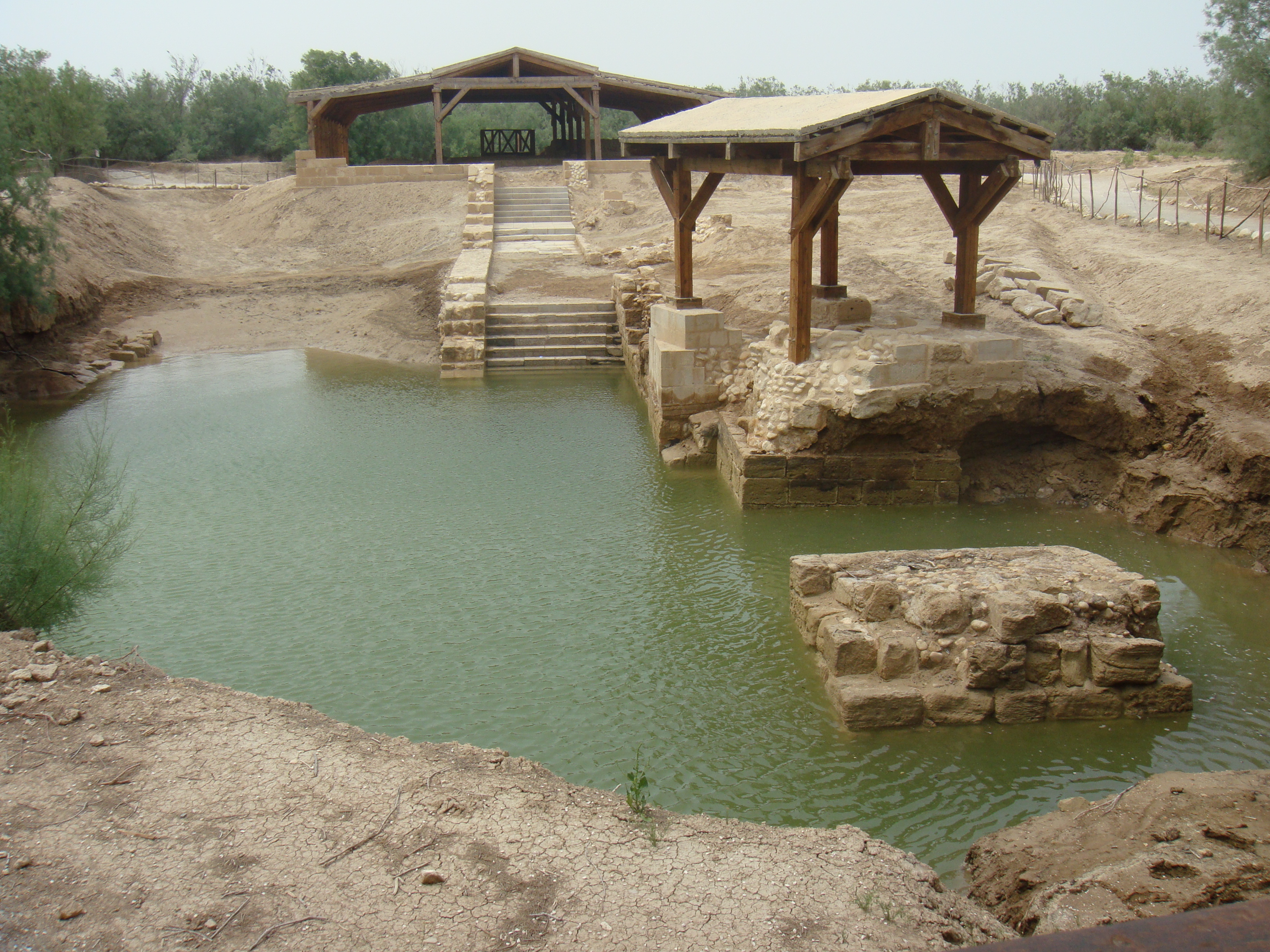
John, the ascetic prophet-like figure whose dress is similar to Elijah,3 the forerunner to the messiah, also associated with the annunciation of John the Baptist in the Lukan birth narrative (Luke 1:13-16), was the baptizer, and ideas circulate about the function that John supposed his baptismal practices to be serving. Ideas include a recapitulation of the entry into the land promised to the ancestors told by the Exodus narrative. Some unresolved issues notwithstanding, John is proposed to be a member of the Essene sect that may have participated in ritual bathing for some sort of death and rebirth narrative within an eschatological framework.
Jesus, for his part, “the glutton and drunkard,” may bring to mind for audiences a chilling scene of punishment from the Torah. In Deuteronomy 21:20 we find the instructions for how to handle a rebellious child: “They shall say to the elders of his town, ‘This son of ours is stubborn and rebellious. He will not obey us. He is a glutton and a drunkard.’” We learn the fate of the rebellious son in the very next verse, “Then all the men of his city must stone him to death. In this way you will purge wickedness from among you, and all Israel will hear about it and be afraid” (Deuteronomy 21:21).
So here is my first major premise: John, demon-possesed, Jesus, a glutton and drunkard, are characterized as such by the Mathean author to bring to mind the risk of death, by state of impurity and rebellious inclination, respectively. I think Matthew is essentially handling an objection he knows is in the air about John and Jesus. In effect, the anonymous evangelist is saying, Hey I know these two are risky to follow (John and Jesus had both been executed by Rome, after all), but don’t listen to the group-think, Jesus will reveal hidden things and offer an alternative interpretation of the law.
An Aside on Hiddenness, Essenes, and Early-Christianity
I’ve gestured toward the idea that John is associated with the Essenes, and there is some reason to think that shared theological notions appear both in Essenes writings and early-Christian writings. I don’t prefer to call the gospels “early Christian” because I think that term is wholly anachronistic in the setting of the gospels. I follow Daniel Boyarin who holds a plurality of religious worldviews existed within the first through third century landscapes, with some Jewish Christ-followers, non-Jewish Christ-followers, and Jewish non-Christ followers. Boyarin submits that something called Christianity doesn’t really emerge as a wholly separate group until late third, early fourth centuries. At any rate, Essene writings do strike similarity with gospel writings. I’ve discussed this elsewhere with respect to apocalyptic notions.
It is interesting to name the further theological implications that this connection may have to this Matthean text. My claims here are on shaky ground, but let’s take a closer look. I’m citing work that is quoted within a couple of Wikipedia articles. Friendly reminder that my effort here is to produce a fallible lay newsletter for general readers and not a submission for peer review! I don’t want to go too far in my claims, but likewise, there is explanatory virtue here. Take what you like from my assertions and jettison the rest.
Quoted in the article about the proposed leader of the Essene sect, the Teacher of Righteousness, the author quotes from 1QpHab, a scroll preserved by the Qumran community, dated to the latter half of the first century BCE:
The Teacher is extolled as having proper understanding of the Torah, qualified in its accurate instruction, and being the one through whom God would reveal to the community “the hidden things in which Israel had gone astray” (my emphasis).
And in the same article, connecting the Essenes explicitly to Christianity:
Rituals of the Essenes and Christianity have much in common; the Dead Sea Scrolls describe a meal of bread and wine that will be instituted by the messiah, both the Essenes and Christians were eschatological communities, where judgement on the world would come at any time. The New Testament also possibly quotes writings used by the Qumran community. Luke 1:31-35 states “And now you will conceive in your womb and bear a son and you will name him Jesus. He will be great and will be called the son of the Most High…the son of God” which seems to echo 4Q 246, stating: “He will be called great and he will be called Son of God, and they will call him Son of the Most High…He will judge the earth in righteousness…and every nation will bow down to him” (emphasis in original).
If nothing else, these connections remind us that Jesus, and neither are the gospel accounts that mediate our access to Jesus, written in a theological or cultural vacuum. The Second Temple period is the context for the stories about Jesus (written after its destruction), and this is shared Jewish experience for the Jesus movement. The evangelizers are almost certainly aware of the many sects and competing theological and messianic commitments that were in the air. Whether direct influence or oral tradition, it would be good for modern readers to keep this in mind.
The Easier Yoke and the Written Law
We turn again to the Talmudic writings of Pirkei Avot to offer a description of the yoke of the law:
Rabbi Nehunia ben Hakkanah said: whoever takes upon himself the yoke of the Torah, they remove from him the yoke of government and the yoke of worldly concerns, and whoever breaks off from himself the yoke of the Torah, they place upon him the yoke of government and the yoke of worldly concerns.4
The claim here is that yoking oneself to Torah eases the burden of being yoked to worldly concerns. I don’t think this means to abandon legal doctrine within society; rather, that trust in Torah may liberate those who carry the burden of worldly concern. Let’s keep in mind that Torah prioritizes ethical treatment of others, so I don’t see this claim as some sort of theocracy. I think the idea is one of trust. Adherence to the law liberates a person from constant concern about what will happen tomorrow.
The major disagreement between Jesus and the Pharisees (another rival Jewish sect, in debate with the Essenes), involved proper interpretation of the law. In the scene following our reading today, Jesus is yet in another disagreement about the law (Matthew 5 relating to collecting and eating grain on the Sabbath), and the Matthean author appeals to Jesus’s legal argument from a story about David. These legal arguments were common proto-Rabbinic discourse. Jesus’s accusation of the Pharisees (as told in the Thiessen book quoted earlier, but I don’t have the space to define the terms of the argument here), relate to their added Oral Law that enacted further requirements for Torah observance beyond what is stated in the Written Law. Jesus offers “an easier yoke,” that is divorced from the Oral Law; what Jesus calls “human precepts” (Matthew 15:7-10).
Here is where I’ll stitch all this together and try to wrap us up!
What we’ve claimed so far is this:
John’s supposed demon possession would connect him to a force of death
Jesus described as a glutton and a drunkard connects him to the rebellious son, a capital offense in Torah
The Essenes were keenly interested in the purifying forces of baptism, and John was likely (possibly? plausibly?) an Essene
The Essene sect lifted up a Teacher of Righteousness who pursued a rival interpretation of the law, framed their understanding in revealing hiddenness, and promoted ideas of a holy meal instituted by the messianic figure
Jesus’s critique of the Pharisees is about their further requirements to the law, what is described as “human precepts” places a heavier yoke on people
In the end, I suggest that today’s reading, understood in its ancient context, proposes that John and Jesus, in the tradition of the Essenes, a wilderness community relying on baptismal rites and preaching the end time, would be risky and rebellious religious leaders, and their alternative interpretation of the law offered a lighter yoke than the rival Pharisaic view.
The Matthean author understands Jesus to be revealing hidden things like the Teacher of Righteousness, and the anonymous author’s rhetorical aim is to characterize Jesus as an interpreter of the law that was easier and more sustainable for Galilean Jews, outside of those “Big City” Pharisees.
Stick the law of Moses, be gentle and humble, adhere to purity practices, and band together in the agrarian Galilee following the destruction of the Temple. These are the themes and historical context that I think are relevant to this assigned gospel reading.5 Once again, I argue, Jesus was about right conduct interpreted through the Mosaic law to prepare for the coming end time to deliver Israel from its history of oppression at the hands of larger empires, like the Romans who slaughtered tens of thousands, including Jesus, an historical setting that was the lived experience of the gospel writers.
The literal translation is “Ethics of the Fathers,” but I’ve opted for the more inclusive “ancestors.”
“Treating tzaraʿat [impurity] and certain genital discharge as cases of impurity reflect concerns over disease and contagion. These conditions pose a tangible mortal threat and are accompanied by physical symptoms, where the body is fatigued or in a compromised state. For the ancients, such weakened embodied experience reinforced a belief in demonic attack.” https://www.thetorah.com/article/tzaraat-purification-a-vestige-of-demonic-exorcism.
Matthew 3.4, “Now John wore clothing of camel’s hair with a leather belt around his waist, and his food was locusts and wild honey.” And 2 Kings 1.8, “‘A hairy man with a leather belt around his waist.’ He said, ‘It is Elijah the Tishbite.’”
Pirkei Avot 3.5.
I wanted to explore ideas of the older serving the younger that I think are also relevant here, especially in the dialogue with John’s worry from prison that Jesus is not fulfilling what John thought he would that appear immediately before today’s reading. John (the older cousin by way of Elizabeth and Mary) served Jesus, and I wonder how Essau serving Jacob and taking his birthright may feature here, too, a common trope in the Hebrew Bible, but I’ve chosen not to develop that topic in this essay.
 Hitzonim | Outsiders
Leave a comment