
Matthew in context with other cultural, cultic, and theological ideas of the first century
Introduction: Reading Text in Con-Text
We meet the people and ideas of the first century Jesus Movement through the Greek Scriptures, and what we know about Jesus is mediated largely through the gospel writers. I try to draw an important distinction between what we claim to know about the historical Jesus and what we infer about the gospel writers’ contexts and how that influences their presentation of Jesus. In this post I supplement the assigned gospel reading from Matthew with canonical and non-canonical texts that present ideas that were likely “in the air” when the gospel writers composed their accounts.
My claim here is not to assert that all of these texts were used explicitly by the gospel writers; though, we do see direct quotations from the Torah, prophetic books, and psalms in many gospel accounts. My claim here is a weaker argument only to suggest that by examining these additional sources and texts in context, we’ll gain better insights relating to what the gospel writers brought to their narrative constructions about Jesus.
Something I’ve decided to largely put aside in this post is a source critical approach to the composition of the gospels. We’ve spoken at length here about Markan priority asserting that Mark was the earliest gospel composed, then subsequently altered and expanded on by Matthew and Luke. The hypothesized Q Source, a “Sayings Gospel” may have been used by the Markan and Lukan author, and the Gospel of Thomas that I use in this post is support of the hypothesis that Sayings Gospels were a genre; further, accounts like “Doubting Thomas” is cited to motivate an argument that the Johannine author wrote portions of the fourth gospel to argue against some sayings and ideas in the Gospel of Thomas.
All in all I’ll bracket these conversations here, but I hope to continue allowing these ideas into our shared discussion.
Let’s get to the text!
Matthew 10:24-39
New Revised Standard Version Updated Edition; all numbered verses in block text format are from the gospel reading, and all text with plan format and quotation marks are from other sources or include my comments.
24 “A disciple is not above the teacher nor a slave above the master; 25 it is enough for the disciple to be like the teacher and the slave like the master.
This relationship between slave and master is repeated in other places, suggesting that this teacher-student dynamic, to be like the teacher, was a virtue: “The Holy One, blessed be He, said to Abraham: ‘Sufficient for your servant is the reward that he be like his master.’” (Talmud: Beresheit Rabbah 49)
If they have called the master of the house Beelzebul, how much more will they malign those of his household!
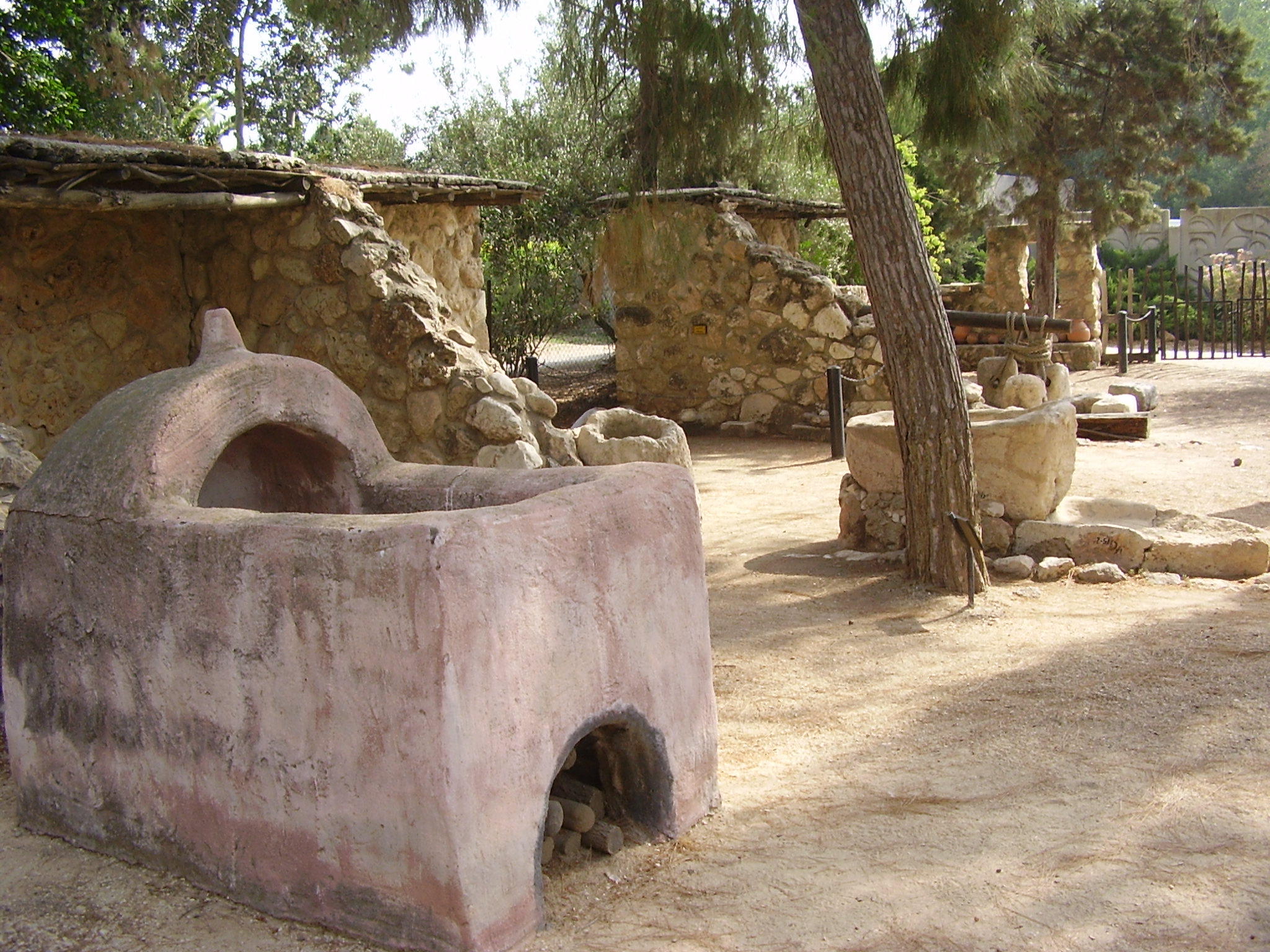
We learn interesting (intra-biblical) history from 2 Kings 1:2-3, where the following story is told, “Ahaziah had fallen through the lattice in his upper chamber in Samaria and was injured, so he sent messengers, telling them, ‘Go, inquire of Baal-zebub, the god of Ekron, whether I shall recover from this injury.’ But the angel of the Lord said to Elijah the Tishbite, ‘Get up, go to meet the messengers of the king of Samaria and say to them: Is it because there is no God in Israel that you are going to inquire of Baal-zebub, the god of Ekron?’” See photo below for a reconstructed street from a location approximate to biblical Ekron.
According to commentary in the Jewish Publication Society Jewish Study Bible, the name, “Baal-zebub” means “Lord of the Flies,” but this may be the author’s deliberate corruption of the name, which likely was Baal-zevul, meaning “Lord of Glory; Dominion; Majesty.”
Baal-zevul was purportedly a healer, and these names with Baal refer to the Canaanite God. Interestingly, some scholars advance the notion that Israel’s God, signaled by the tetragrammaton, which I try to be careful about using for respect of the tradition of Israel that would not speak that name, slowly enveloped the characteristics of Baal and eventually replaced Baal. This is one reason, it’s argued, that the Scriptures of Israel include such harsh rhetoric about Baal and Canaanites.
A further note, in Matthew 12, Jesus attests to casting out demons, “like Beelzebul.”
We couldn’t present a satisfactory survey of Jewish-Christian development of the Beelzebub character here, but for one more salient reference that also points to later theological development of Beelzeub we can look to the non-canonical Testament of of Solomon. For dating, “Mid-twentieth century scholarship tended to agree that much of its content reflects the first-century Judaism in Israel and includes material much earlier than its composition.” This testament ascribed to King Solomon describes how he marshalled demons to build his Temple: “With Beelzebul under his command, Solomon now has all of the demons at his bidding to build the temple. Beelzebul reveals that he was formerly the highest ranking angel in Heaven.”
I enjoy tracing the history of development of these ideas because it reminds us that our understanding and the biblical authors’ understanding is sufficiently different that we shouldn’t merely impose our thinking onto the text—to the extent that we can avoid it.
26 “So have no fear of them, for nothing is covered up that will not be uncovered and nothing secret that will not become known.
(Thomas 5) Jesus said, “Recognize what is in your sight, and that which is hidden from you will become plain to you. For there is nothing hidden which will not become manifest.”
27 What I say to you in the dark, tell in the light, and what you hear whispered, proclaim from the housetops.
(Thomas 33) Jesus said, “Preach from your housetops that which you will hear in your ear. For no one lights a lamp and puts it under a bushel, nor does he put it in a hidden place, but rather he sets it on a lamp stand so that everyone who enters and leaves will see its light.”
28 Do not fear those who kill the body but cannot kill the soul; rather, fear the one who can destroy both soul and body in hell. 29 Are not two sparrows sold for a penny? Yet not one of them will fall to the ground apart from your Father. 30 And even the hairs of your head are all counted.
The following ideas about hell, or Gehenna, would be familiar to the gospel writers and likely to their audiences, “In fact, the scholarly consensus is that, at least in the Land of Israel, synagogues were used for public reading of the Torah even before they were used for communal prayer” (source). Jesus, should he have spoken these words and certainly the gospel writers and the audience would hold these thoughts in mind about Gehenna:
2 Kings 23:10: He defiled Topheth, which is in the valley of Ben-hinnom, so that no one would make a son or a daughter pass through fire as an offering to Molech.
Jeremiah 7:31: And they go on building the high place of Topheth, which is in the valley of the son of Hinnom, to burn their sons and their daughters in the fire—which I did not command, nor did it come into my mind.
2 Chronicles 28:3: And he made offerings in the valley of the son of Hinnom and made his sons pass through fire, according to the abominable practices of the nations whom the Lord had driven out before the people of Israel.
2 Chronicles 33:6: He made his son pass through fire in the valley of the son of Hinnom, practiced soothsaying and augury and sorcery, and dealt with mediums and with wizards. He did much evil in the sight of the Lord, provoking him to anger.
The idea of hell as a place for eternal conscious torment develops later through the apocalyptic tradition, and I don’t think we can read our ideas of hell into the text, but from these verses, we see that what Jesus would have called hell would bring to mind God’s anger and “abominable practices,” including, it would seem, child sacrifice.
31 So do not be afraid; you are of more value than many sparrows.
Luke 12:7; 18 But even the hairs of your head are all numbered. Do not be afraid; you are of more value than many sparrows; But not a hair of your head will perish.
This argumentative strategy here with respect to the sparrows is to argue from the stronger to the weaker and is a common Torah exegetical practice called kal v’chomer:
“The most basic hermeneutical methodology is the kal v’chomer, known in Latin as an argument a fortiori, meaning ‘from the stronger case.’ … The Torah tells us that Yom Tov is just like Shabbos except that food preparation is permitted. In other words, the laws of Shabbos are known to be more stringent than those of Yom Tov. If something is known to be permitted on Shabbos, kal v’chomer it must be permitted on Yom Tov. Conversely, if something is known to be prohibited on Yom Tov, kal v’chomer it must be prohibited on Shabbos.”
Matthew often has Jesus engaging in Torah (Biblical) hermeneutics. For example, when Jesus teaches, “You’ve heard it said …, but truly I tell you …” This interpretation of the law is often an intensification of the law, which the ancient rabbis described as “putting a fence around Torah.”
We have reason to believe that Jesus, or at least Matthew’s author has it that Jesus, is skilled with biblical hermeneutics. To understand this tradition, here, from the second century BCE through second century CE document, Pirkei Avot, or “The Ethics of the Fathers”: “Moses received the Torah at Sinai and transmitted it to Joshua, Joshua to the elders, and the elders to the prophets, and the prophets to the Men of the Great Assembly. They said three things: Be patient in [the administration of] justice, raise many disciples and make a fence round the Torah.
32 “Everyone, therefore, who acknowledges me before others, I also will acknowledge before my Father in heaven, 33 but whoever denies me before others, I also will deny before my Father in heaven.
34 “Do not think that I have come to bring peace to the earth; I have not come to bring peace but a sword.
35 For I have come to set a man against his father,
and a daughter against her mother,
and a daughter-in-law against her mother-in-law,
36 and one’s foes will be members of one’s own household.
(Thomas 16) Jesus said, “Men think, perhaps, that it is peace which I have come to cast upon the world. They do not know that it is dissension which I have come to cast upon the earth: fire, sword, and war. For there will be five in a house: three will be against two, and two against three, the father against the son, and the son against the father. And they will stand solitary.”
37 “Whoever loves father or mother more than me is not worthy of me, and whoever loves son or daughter more than me is not worthy of me,
(Thomas 55) Jesus said, “Whoever does not hate his father and his mother cannot become a disciple to me. And whoever does not hate his brothers and sisters and take up his cross in my way will not be worthy of me.”
38 and whoever does not take up the cross and follow me is not worthy of me. 39 Those who find their life will lose it, and those who lose their life for my sake will find it.
I really enjoy reading how the Lukan author packs so much into their telling of this material. It’s a speedy summary! Luke 12:4-9: “I tell you, my friends, do not fear those who kill the body and after that can do nothing more. But I will show you whom to fear: fear the one who, after killing, has authority to cast into hell. Yes, I tell you, fear that one! Are not five sparrows sold for two pennies? Yet not one of them is forgotten in God’s sight. But even the hairs of your head are all numbered. Do not be afraid; you are of more value than many sparrows. “And I tell you, everyone who acknowledges me before others, the Son of Man also will acknowledge before the angels of God, but whoever denies me before others will be denied before the angels of God.”

 Hitzonim | Outsiders
Leave a comment