
The Fourth Gospel Continues an Engagement with Genesis and Jewish Themes
Previously, in the post to support Maundy Thursday, the Christian recognition of Jesus’s “Last Supper,” through the assigned lectionary text from John 13, featuring Jesus washing the disciples’ feet, I went some way toward connecting the fourth gospel to the Jewish tradition of midrash. Midrash is a rabbinic form of biblical interpretation that offers commentary on the biblical literature that interprets, expands, and comments on the Hebrew Bible.
Midrash was popular during the second century of the common era; the Johannine community was operating in this same period, and I see both John’s prologue and the foot washing scene to be drawing on the midrash tradition; creating its own midrash in the first instance and drawing from the midrash, Joseph and Aseneth, in the second. These each are midrashic expansions on the book of Genesis.
Continuing my practice to engage Christian texts through a Jewish lens—though, the gospel accounts are not (yet?) Christian texts, noting that within their first and second century contexts, these are Jewish forms of literature and interpretation—I connect today’s assigned lectionary gospel reading from John to Genesis, again.
In short, in the post-resurrection appearances to Mary and the disciples, I follow scholarly evidence that connects the reported appearances of Jesus to the creation story of Genesis in the effort to signal that Jesus establishes a new creation.
John 20:19-31
Because we prioritize beginning with the text as good practice to take the (english translated) text on its own rather than conflate accounts or operate from what we think the text says, let’s read John 20:19-31; New Revised Standard Version Updated Edition:
When it was evening on that day, the first day of the week, and the doors were locked where the disciples were, for fear of the Jews, Jesus came and stood among them and said, “Peace be with you.” After he said this, he showed them his hands and his side. Then the disciples rejoiced when they saw the Lord. Jesus said to them again, “Peace be with you. As the Father has sent me, so I send you.” When he had said this, he breathed on them and said to them, “Receive the Holy Spirit. If you forgive the sins of any, they are forgiven them; if you retain the sins of any, they are retained.”
But Thomas (who was called the Twin), one of the twelve, was not with them when Jesus came. So the other disciples told him, “We have seen the Lord.” But he said to them, “Unless I see the mark of the nails in his hands and put my finger in the mark of the nails and my hand in his side, I will not believe.”
A week later his disciples were again in the house, and Thomas was with them. Although the doors were shut, Jesus came and stood among them and said, “Peace be with you.” Then he said to Thomas, “Put your finger here and see my hands. Reach out your hand and put it in my side. Do not doubt but believe.” Thomas answered him, “My Lord and my God!” Jesus said to him, “Have you believed because you have seen me? Blessed are those who have not seen and yet have come to believe.”
Now Jesus did many other signs in the presence of his disciples that are not written in this book. But these are written so that you may continue to believe that Jesus is the Messiah, the Son of God, and that through believing you may have life in his name.
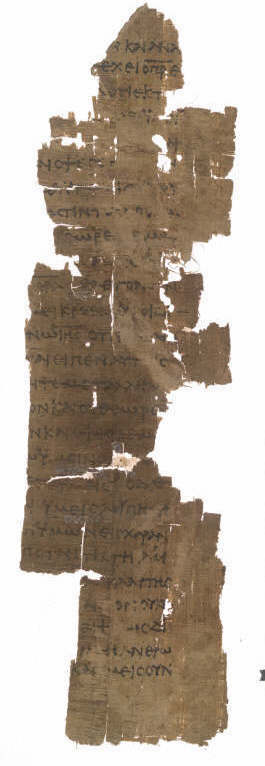
My Resources
To compose today’s Sunday Post I drew from the JANT, a 1957 paper from Jacob Enz who served as pastor of the First Mennonite Church in Indiana and on faculties at Goshen College, Bethel College, and the Mennonite Biblical Seminary, IN; this 1987 paper from D. A. Carson, Research Professor of New Testament at Trinity Evangelical Divinity School; this 1989 paper from Craig R. Koester, the Asher O. and Carrie Nasby Professor of New Testament at Luther Seminary; and this 2010 paper from Jeannine Brown, Professor of New Testament at Bethel Seminary. Each of these papers and commentary influenced themes in this post.
The Jewish Milieu of Second and Third Centuries CE
I won’t belabor the point here, additional details on these connections are available in the earlier referenced Maundy Thursday post, but yet even more evidence of the Jewish setting for the Johannine community is important both to fully grasping the fourth gospel and to confront the anti-Jewish rhetoric of this gospel. Carson specifically argues, with respect to the audience of the Johannine literature:
Non-Christian Jews who may have had some vague exposure to Christianity and are at least interested enough to ask the question Who then is the Messiah? That is surely the most plausible answer, and it meshes rather nicely with papers published by W. C. van Unnik and J. A. T. Robinson, and an earlier monograph by K. Bornhauser, who argue with some force that the Fourth Gospel is designed to serve as an evangelistic tool aimed at converting Hellenistic Jews to Jesus Messiah. I would include as well proselytes and God-fearers, who would also have considerable exposure to the OT and who would ask the question in the same way as the Jews with whom they had come to worship
I am not sure I’d frame things in this way, noting “vague exposure to Christianity,” because I wouldn’t claim that the Johannine community represents a full Christian break from Judaism, but the point is taken well enough that the audience for the fourth gospel does signal some divergence of christ-following Jews from the larger Jewish community. My complaint, then, isn’t to claim that exposure to the idea that Jesus is the anointed one, rather, that to call this “Christian” is anachronistic.
At any rate, Carson continues, and recall I’ve also said some about the Nicodemus scene that Carson mentions:
It may even have been part of John’s strategy to drive a wedge between ordinary Jews and their leaders among his readership, while still in the example of Nicodemus, leaving hope even for the leaders themselves. This is not meant to short-circuit the extremely complex questions surrounding the identity of the [Greek, Ioudaios, “Jews”] but only to point out that some kind of what appears to be “love/hate” relationships between the converted and the unconverted are standard fare in evangelistic literature.
Carson’s point is that the literature of the fourth gospel is both instructional and evangelical in so far as it may articulate a sort of polemic against those Jews who did not follow Jesus the christos: “That there were various messianic expectations in the Second Temple period is well known; that nascent Christianity was early harnessed to such expectations while simultaneously outstripping them…is equally well known,” Carson claims.
The main thrust of this post, as I introduced, is to connect the fourth gospel, again, to Genesis, but one final note on the lesser-known Jewish literary similarities—the Jewish milieu, JANT points us to the third of early second century BCE apocryphal work of Tobit, wherein an angel, Raphael, greets an audience in a similar way to the purportedly resurrected Jesus: “But Raphael said to them: ‘Do not fear; peace be with you! Bless God now and forever.’”
We seen evidence for this connection in the 2012 paper from Philip Munoa, Professor of Religion at Hope College (The Reformed Church in America), quoting from the abstract:
This article demonstrates that the apocryphal text of Tobit sheds important light on notions of deliverance that were emerging in Second Temple Judaism. Raphael, the angel-deliverer of Tobit, depicts a stage in the development of angelic mediation that stands apart from angelic deliverers in previous Jewish texts, and can be significantly associated with early Christianity’s view of Jesus. Here, for the first time, is a heavenly being who appears as a nondescript Israelite and brings news of hope, healing and demonic liberation to suffering Israelites of little account. Raphael offers a precedent for Christian accounts that the historical Jesus was a preexistent savior who lived as a simple Israelite.
Genesis and a New Creation
Previously we’ve examined how the prologue to the fourth gospel and the foot washing scene draw from separate midrash traditions. This situates the gospel, or at least portions of its composition, within the context of Jewish literature and interpretive practice. The author of the fourth gospel, as I’ve said, borrowing a term introduced by Hebrew Bible scholar Walter Brueggemann, the Johannine author is negotiating with the ancient literature. Each of us now, who read the Biblical literature and fit in to our context, are also negotiating.
The Johannine author continues this practice, as described by Jeannine Brown (2010):
While virtually all commentaries recognize an allusion to Gen 2:7 in John 20:22 (“breathe”; “life”), a number of other creation allusions occur in John 19-20 as well. These include the setting of John 20 and the connections drawn between Adam and Jesus.
Brown presents evidence for this claim, from the opening of today’s assigned text and onward: “When it was evening on that day, the first day of the week.” Genesis the connections to Genesis are obvious. Genesis 1:5 states, “God called the light day, and the darkness [God] called night. And there was evening and there was morning, the first day.”
“The reader is reminded of the setting once again in the midst of the resurrection story,” explains Brown, “when Mary supposes Jesus to be the gardener.” Further evidence of this Adam-Jesus connection, Brown looks to the scene with Pilate:
If John does imply in 20:15 that Jesus is an antitype of Adam, it becomes quite probable that he introduces this notion earlier in the passion story. In Pilate’s interrogation of Jesus (18:28-1 9: 16b), the evangelist presents Jesus to the crowd outside the praetorium with the words, “Behold, the man!”
Further, argues Brown, “the most clearly recognized allusion to Genesis 2 occurs in John 20:22, where Jesus breathes on his disciples and says to them, ‘Receive the Holy Spirit.’ Virtually all commentators understand John to be echoing the moment in Gen 2:7, when God breathes into Adam the breath of life.”
On this point, Brown points us to Ezekiel 37:9; NRSVUE:
Then he said to me, “Prophesy to the breath, prophesy, mortal, and say to the breath: Thus says the Lord God: Come from the four winds, O breath, and breathe upon these slain, that they may live.”
Finally, according to Brown, expanding to a meat-commentary on the signs source operative in the composition of the fourth gospel, “one reason John draws attention to these seven signs of Jesus is to echo the seven days of creation.”
Conclusion: The Jewish Milieu of the Johannine Community
My relationship to these texts are deep, enduring, and complicated. I feel—viscerally, in ways that are difficult to communicate through words—a deep connection to the Jewish ethno-religious identity that is my immediate Jewish ancestry, discovered late in my adolescence. And yet, the setting for my volunteer and organizing efforts within a faith-based tradition is a progressive mainline Protestant denomination. It is at the intersection of these identities that informs my approach to Biblical scholarship and interpretation.
In my writing about the fourth gospel I seek to educate readers on the nuanced Johannine theological position, both entrenched in Judaism while, perhaps, moving away from it, but even in those instances that read most obviously as early Christian development and divorce from Judaism, there is midrash, knowledge of Temple practice and Jerusalem, deep engagement with the Hebrew Bible and second and third century hellenized Greek/Jewish theological and eschatological notions.
Maybe it is the confusion and complexity of the fourth gospel that reminds me of my own religious identity, both in negotiation with the ancient.
 Hitzonim | Outsiders
Leave a comment