
I’m Adam Marc, and I am a Jew in diaspora. With conditions.
My dad is Protestant pastor, who is more than a father, he is also a friend, a mentor, a study partner. It was thanks to his guidance, support, and encouragement that my deep love of Biblical study was nurtured. His commitments shaped my own: multiculturalism, religious pluralism, nonviolence, radical hospitality, consistency of character in all spaces, integrity, and deep trust in his theological characterization of an enduring, providing, and caring Holy One.
My mom is empathic, an artist, and she is deeply committed to her children. I had the privilege and education of watching my mom trace down her biological family after she was adopted as an infant. A journey that lasted nearly a decade that occurred during my middle and high school years. Watching my mom’s very rigid search (my homage to Jonathan Safran Foer; The New Yorker), she discovered our connection to our family who shares our wider geographical area, a Jewish family committed to the values of democracy, organizing, justice, and the law. So it is, not merely geographic, but in values and principles, too, we share a space.
My mom is Jewish, in technical terms, following matrilineal descent, and so am I, by this tradition of ethno-religion, as are my mom’s siblings, who are, in fact, close in age to her. It was this discovery of connection that opened something from deep within my identity that nudged (maybe shoved) me toward a deep study of Judaism and my place within it. This study has brought me from Rabbi’s homes, to synagogues, from academic university course work to friend’s living rooms for Torah study, and to our own table for Shabbat, where I’ve also hosted holiday rituals and seders.
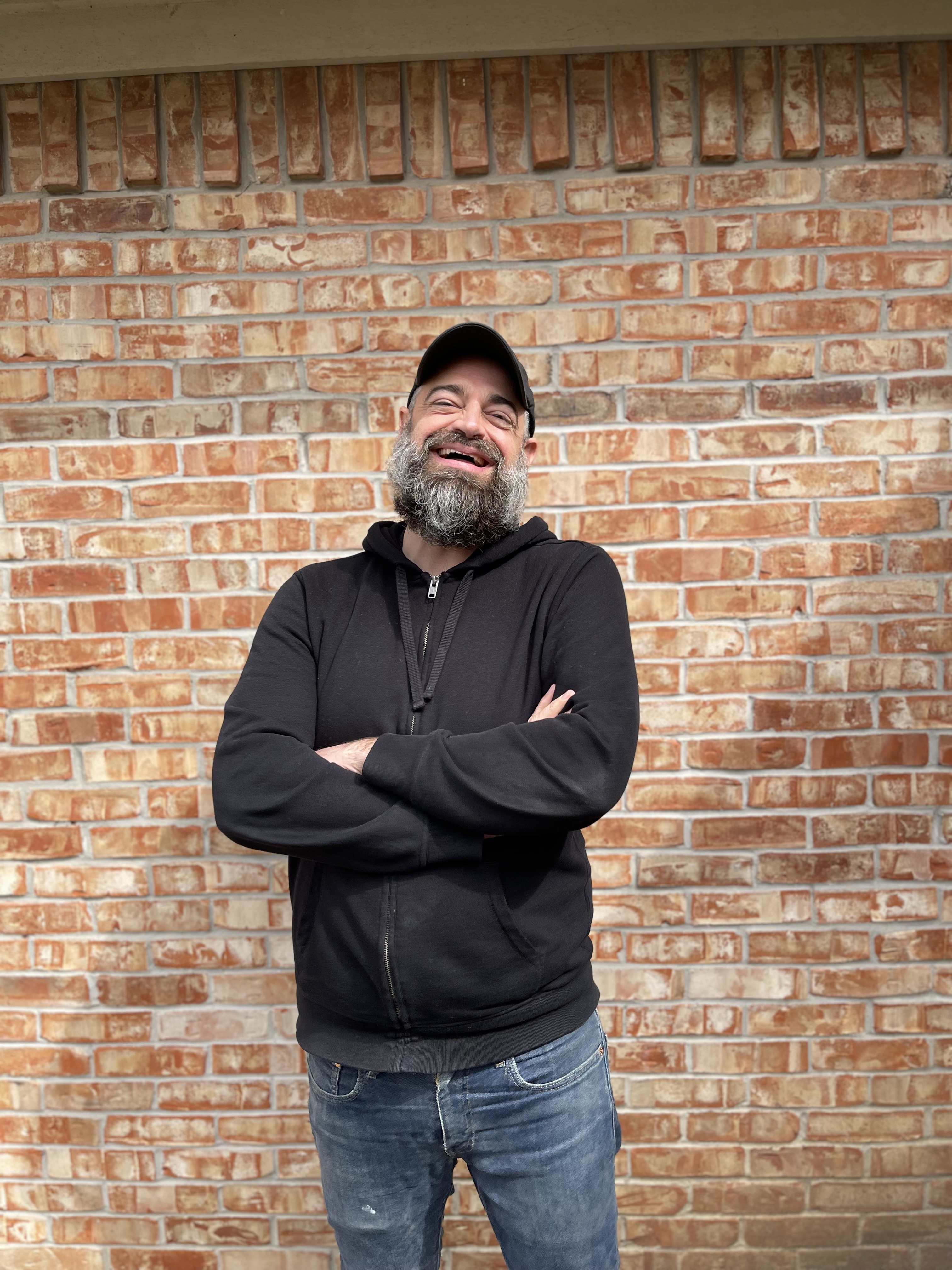
For years, I have struggled with an insecurity, feeling a deep sense of personal belonging to the Jewish community but lacking the upbringing and childhood of a typical Jew. I was not bar mitzvahed, and I did not attend Hebrew school. Because of our non-Jewish last name, I don’t pass the Jewish last name test, and it is humbling, if not alienating, to my sense of self, to spend several hours in Judaism adult education classes with those who sought to learn more about the Jewish rituals because one of their children would soon marry a Jewish person and would-be converts to the faith. Meanwhile, I’m recovering a lost identity.
No disrespect intended, we’re all at Sinai, so the saying goes, when we undergo conversion or b’nai mitzvah. Clearly, I hold some resentment toward gate-keeping the faith, and so, it would be foolish and contradictory to commit these same mistakes by positioning myself against those who come to Judaism for reasons not having to do with their own ethno-religious line.
Antisemitism renders such gate-keeping necessary. And the the idea that Judaism is a religion to join is somewhat a modern notion that ironically follows Protestantism’s protected status as a religion within the rise of the modern nation state. But, see, embracing this identity, for me, has only part to do with a faith to learn and more to do with my identity to affirm. My earliest recollection of the adolescent Adam who learned of our family with my mom, uncovering my place in our family has been a return; a coming home.
“You are correcting a cosmic error by returning to our people,” a Lubavitcher rabbi told me. Maybe that makes sense to readers, but at the risk of overstating, there is no doubt that genetic memory courses through my veins.
I’m also a philosopher by academic training, and a skeptical one at that. My personal theological commitments find me more agnostic on the question of the existence of the Holy One, and while I understand how confusing this may read for Christians whose religious identity is often shaped by acceptance of creedal and doctrinal beliefs, I define my place in religious settings due to ritual and cultural practice, lifestyle and behavior; treatment of others and the world, and not, for example, a commitment to a personal lord and savior.
This late discovery of my connection to my people, my American outlook, my desire for self-study to learn Torah and the blessings, and my theologically progressive stance converge to carve out a unique Jewish identity. In this way, and it’s taken my a long, long while to reconcile these nuances of religious identity, I count myself as an authentic member of the Jewish diaspora. Paradoxically, my outsider status in the Jewish community affirms this status with deeper commitment to practice the ancient notion of teshuvah.
My Christian upbringing and continued engagement in Christian spaces is the arena for the study, speaking, and writing, of which this newsletter is part, that seeks to combat antisemitism while educating my Christian siblings about the people and traditions that their leader, Jesus, and the writers of the gospel and authentic epistles share.
These are my notes from the diaspora because it is the Jewish diaspora of which I count myself a member.
 Hitzonim | Outsiders
Leave a comment